



How to Improve YouTube CTR: 10 Proven Strategies
Have you ever spent hours making a YouTube video, only to discover that very few people are clicking on it? You are not alone. Many creators experience this problem, even when their videos contain useful information.
Sometimes, the problem is not the video itself. People may simply scroll past it because the title does not catch their attention or the thumbnail does not clearly show what they will gain by watching.
This is where YouTube CTR becomes important. CTR stands for click-through rate. It measures how often people watch your video after seeing a registered thumbnail impression on YouTube.
The good news is that you can improve your chances of getting clicks without buying views or making misleading promises. In this guide, you will learn 10 practical ways to improve YouTube CTR, create better thumbnails, write stronger titles, and use analytics to make smarter decisions.
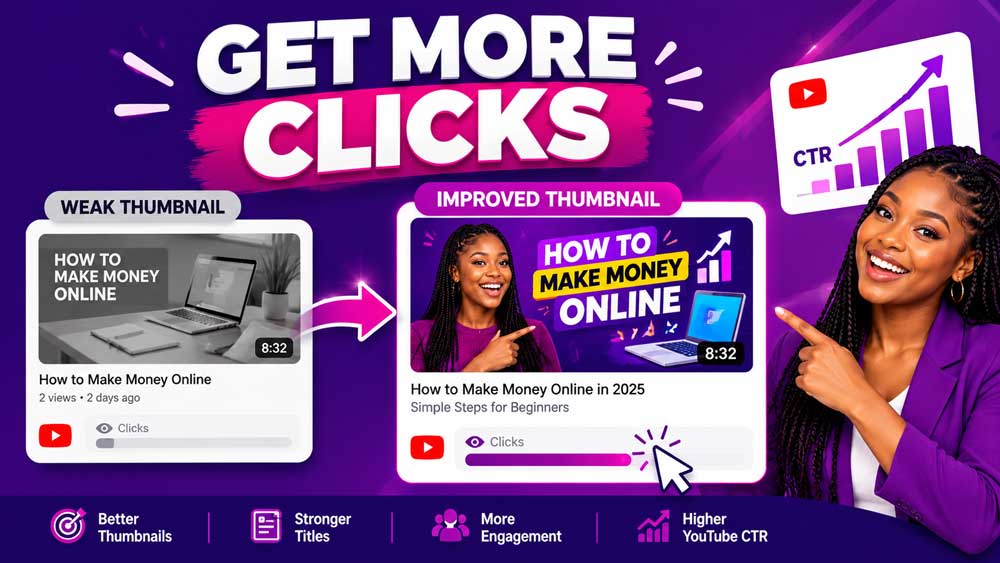
What Is YouTube CTR?
YouTube CTR is the percentage of counted thumbnail impressions that result in people clicking to watch a video. For example, if your video receives 1,000 registered impressions and 50 of those impressions lead to views, your impression click-through rate is 5%.
Here is the simple formula:
YouTube CTR = Views from impressions ÷ Impressions × 100
Remember that YouTube does not count every place where someone might see your video as an impression. Views from external websites and some other sources may not be included in this calculation.
Why does CTR matter? Imagine your video is a shop on a busy street. Your thumbnail is the shop window, while your title is the sign above the door. If both are unclear, people may walk past without stopping.
However, a high YouTube CTR does not automatically mean your video will receive more views. You also need content that satisfies viewers and keeps them interested.
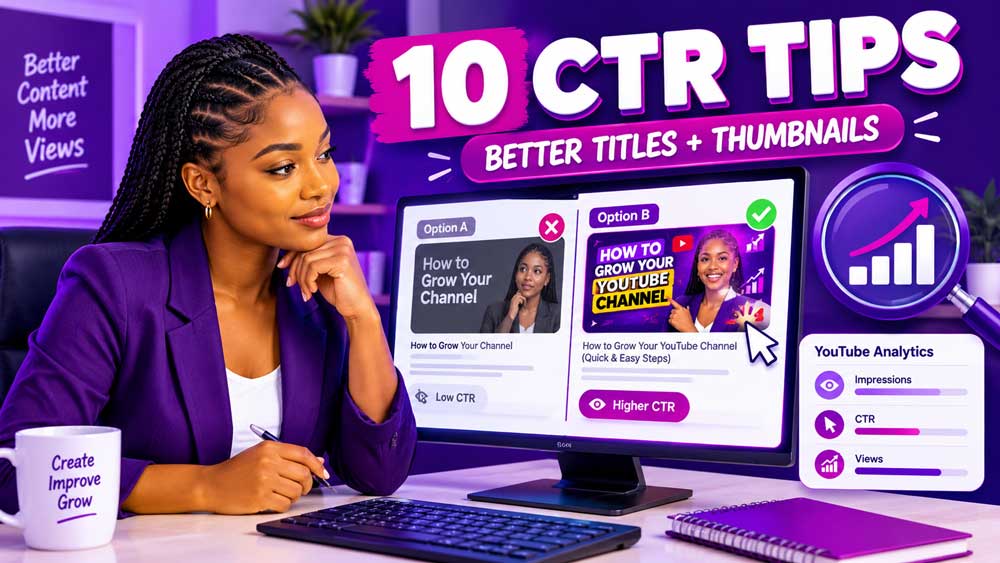
How to Improve YouTube CTR: 10 Proven Strategies
1. Create Thumbnails That Stand Out
Your thumbnail is often the first thing people notice when browsing YouTube. A strong thumbnail gives viewers a quick idea of what your video offers and why it may be worth their time.
Use a clear subject, good contrast, and a simple design. For example, if your video explains how to get more YouTube views, you could show a creator looking at an analytics screen with a rising graph. The image should communicate the topic without requiring viewers to study every detail.
Avoid filling your thumbnail with too many words, tiny icons, or unrelated images. Check how it looks on a mobile phone, where the image may appear very small. For additional guidance, read YouTube’s official thumbnail and title tips.
2. Write Clear and Compelling Video Titles
A good title tells people what they can expect while giving them a reason to click. It should be specific, easy to understand, and connected to the subject of your video.
For example, “YouTube Tips” is too broad. A more useful title might be “How to Improve YouTube CTR in 10 Simple Steps.” The second version tells viewers exactly what they will learn.
Place important words near the beginning when possible, and avoid making the title unnecessarily long. Do not promise instant success or results that your video cannot deliver. An honest, useful title can attract the right audience and build trust over time.
3. Make Your Title and Thumbnail Work Together
Your title and thumbnail should tell one clear story. They should support each other instead of repeating the same message or presenting two unrelated ideas.
Suppose your title is “Why Your YouTube Videos Get No Views.” The thumbnail could show a video analytics screen with a low-view count and the words “WHAT’S WRONG?” Together, they introduce a problem and invite viewers to learn the solution.
Think of the title as the explanation and the thumbnail as the visual clue. When both communicate the same idea, viewers can understand your video quickly. Make sure neither element suggests something that the actual video fails to explain.
4. Understand Your Target Audience
You cannot attract everyone with one video, and you do not need to. Your goal is to make content that the people most likely to benefit from it can recognise immediately.
For example, a beginner who wants to start a YouTube channel may prefer a title such as “YouTube SEO for Beginners: Start Here.” An experienced creator might be more interested in “How to Improve CTR on YouTube Suggested Videos.”
Consider the questions your audience asks, the problems they face, and the words they use when searching. Read comments on your own videos and look for repeated questions. When your title and thumbnail match the needs of a specific audience, they become more relevant to those viewers.
5. Use Curiosity Without Clickbait
Curiosity gives people a reason to find out more. You can create it by highlighting a common problem, revealing a useful possibility, or asking a question your video genuinely answers.
For example, “Why Your YouTube CTR Is Falling” creates interest because viewers may want to understand what changed. Your video should then explain realistic causes and show practical ways to investigate them.
Clickbait is different. It makes a promise that the content does not fulfil. A title such as “Get One Million Views Overnight—Guaranteed” can mislead viewers and damage their trust. YouTube advises creators to avoid misleading titles and thumbnails because viewers who leave quickly may not find the video satisfying. Aim for curiosity that your content can honestly reward.
6. Research Topics People Want to Watch
Even a well-designed thumbnail may struggle if the topic does not interest the audience you want to reach. Before recording, spend time understanding what people are trying to learn.
Start with YouTube search suggestions, questions in relevant comments, and the topics that perform well on your channel. You can also explore the research insights available in YouTube Studio, where supported, to understand what viewers are searching for.
For instance, if people are asking how to increase watch hours, a video explaining common mistakes may be more useful than a broad discussion of YouTube growth. Choose a clear angle, then create a title and thumbnail that communicate the benefit. Topic research helps you make more informed choices, although it cannot guarantee clicks.
7. Keep Your Thumbnail Simple and Readable
A thumbnail should make sense in a few seconds. If people need to examine several pictures and read a paragraph before understanding the subject, the design may be too complicated.
Choose one main subject, a clear background, and a small amount of text if text adds value. Words such as “FIX YOUR CTR” may work for a video about improving click-through rate, provided the video actually explains the steps.
Use colours that separate the subject from the background, and choose a font that remains readable on a small screen. Before publishing, reduce the thumbnail to roughly the size it might appear in a YouTube feed. If the message is still clear, you are on the right track.
8. Study YouTube Analytics
You do not have to guess whether your packaging is working. YouTube Analytics provides information that can help you understand impressions, click-through rate, views, and viewing behaviour.
Open YouTube Studio and review the relevant video’s analytics. If the video receives impressions but relatively few clicks, investigate the title, thumbnail, audience, and traffic source. If many people click but leave early, check whether the opening matches what the title promised.
Do not judge your YouTube CTR after only a few impressions. Results can change as a video reaches different audiences. Compare similar videos over time and look for patterns instead of reacting to every small movement. You can learn more in YouTube’s official impressions and CTR FAQ.
9. Test and Improve Older Thumbnails
Your work does not end when a video is published. Older videos may still reach new viewers, so reviewing their titles and thumbnails can be worthwhile.
Start by identifying videos that receive impressions but seem less appealing to viewers than comparable videos on your channel. Ask whether the thumbnail clearly shows the topic and whether the title communicates a useful benefit. Make one thoughtful improvement rather than changing everything without a plan.
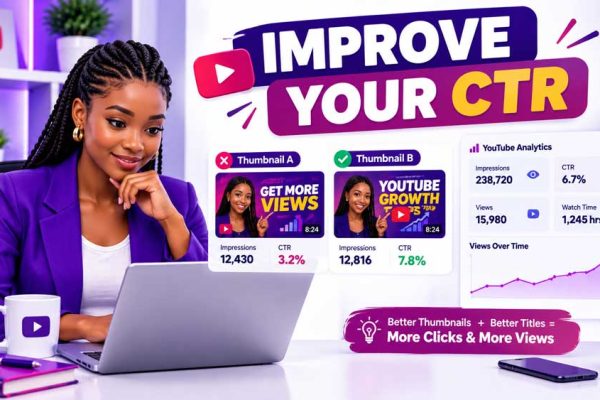
Where available, YouTube Studio’s thumbnail testing feature can help you compare options. Give tests enough time and use the information YouTube provides to judge the outcome. A new thumbnail will not rescue every video, but testing can help you learn which designs connect with your audience.
10. Deliver What Your Title Promises
Getting someone to click is only the beginning. Your video must quickly show that the viewer made a good choice.
If your title promises 10 ways to improve YouTube CTR, explain the first useful point early instead of spending several minutes on an unrelated introduction. Use clear examples, remove unnecessary repetition, and organise the information so viewers can follow it easily.
This matters because clicks alone do not tell the full story. Viewer satisfaction and watch time also matter to a video’s performance. When your content fulfils its promise, people have a better reason to keep watching and return for future videos.
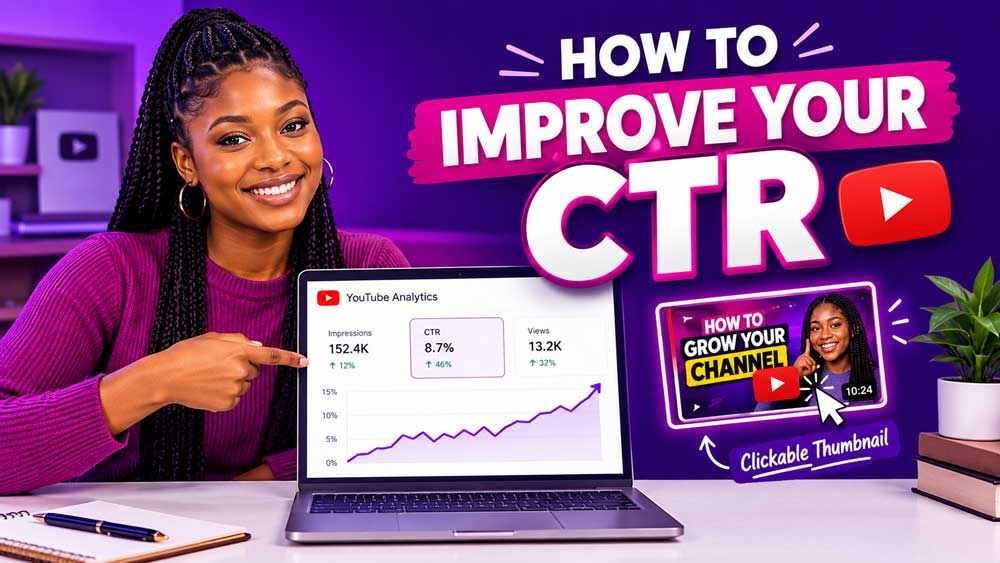
What Is a Good YouTube CTR?
There is no single CTR that every creator should aim for. YouTube explains that about half of channels and videos have an impressions CTR between 2% and 10%, but results vary according to audience, traffic source, and how widely a video is shown.
A new channel may see very different results from an established channel. A video shown mainly to loyal subscribers may also perform differently from one reaching many new viewers on the Home page.
Instead of comparing yourself with every other creator, compare similar videos on your own channel. Look at impressions, traffic sources, viewing behaviour, and CTR together. A lower CTR is not automatically a failure, especially if your video is reaching a much wider audience.
Common YouTube CTR Mistakes to Avoid
One common mistake is changing a title or thumbnail too quickly after publishing. Early numbers may be based on limited data, so give your video time to collect meaningful results before making a decision.
Another mistake is copying a popular creator’s thumbnail without considering your own audience. What works for a large entertainment channel may not suit a small educational channel. Use successful examples for inspiration, but develop a style that fits your topic and brand.
Finally, avoid buying fake views, using misleading thumbnails, or promising guaranteed growth. These shortcuts do not solve the real problem of connecting with interested viewers. Focus on useful content, honest packaging, and steady improvement instead.
Final Thoughts: Improve YouTube CTR Step by Step
Learning how to improve YouTube CTR does not require expensive equipment or complicated marketing skills. Start with the basics: understand your audience, write a clear title, design a simple thumbnail, and make sure your video delivers what you promise.
Next, use YouTube Analytics to find patterns and decide what to improve. You will not get every decision right on the first try, and that is normal. Each video gives you another opportunity to learn what your audience responds to.
If you also want to increase your YouTube views, explore Webiliti’s guide on how to get your first 1,000 YouTube views. If your videos are struggling to attract attention, read why your YouTube videos get no views for more practical ideas.
Ready to improve your next video? Choose one video, review its analytics, and create a stronger title and thumbnail. Small, thoughtful improvements can teach you a lot about your audience.
Want to Grow Your Online Presence?
Creating great YouTube content is only one part of building a successful online brand. You also need a professional online presence and a plan for helping the right people discover your content.
If you are building a creator brand or offering social media management services, explore Namecheap for website and domain-related services that can support your online presence.
You can also explore LeadsLeap to learn about additional traffic-promotion options. Use any promotional service thoughtfully, and focus on attracting people who are genuinely interested in your videos.
Frequently Asked Questions About YouTube CTR
Does a higher YouTube CTR guarantee more views?
No. A higher CTR means a larger share of counted impressions resulted in views, but total views also depend on how often your video is shown and how viewers respond to it.
Should I change my thumbnail if my CTR is low?
Not immediately. Check whether you have enough impressions, compare similar videos, and consider the traffic source. If the thumbnail is unclear or does not match the topic, testing a better option may help.
Can I improve YouTube CTR without spending money?
Yes. You can improve titles, design thumbnails with free tools, research audience questions, and study YouTube Studio analytics without paying for advertising. Results will vary, so keep learning from your own videos.
How often should I check YouTube CTR?
Check it after your video has collected enough data to make a useful comparison. Review trends over time instead of making decisions based on every small change.
What is more important: CTR or watch time?
They measure different things. CTR helps you understand how often counted impressions lead to views, while watch time shows how long people watch. Consider both alongside audience retention and viewer satisfaction.

Leave a Reply