



What Is a Good YouTube CTR? Average CTR Explained
Have you ever spent hours creating a YouTube video, designed what you thought was a great thumbnail, and uploaded it with excitement, only to receive very few views? If this sounds familiar, you are not alone. Many beginner creators face this problem, even when their videos contain useful information.
One important number that can help you understand what is happening is your YouTube CTR, also known as your YouTube click-through rate. It helps you see how often people watch your video after seeing its thumbnail on YouTube.
Understanding your YouTube CTR can help you make better titles, create more attractive thumbnails and find ways to increase your YouTube views. However, a high CTR is not everything. You also need videos that keep people interested.
In this guide, you will learn what a good YouTube CTR looks like, how the average CTR works, how to check your numbers and what you can do to improve them.
What Is YouTube CTR?
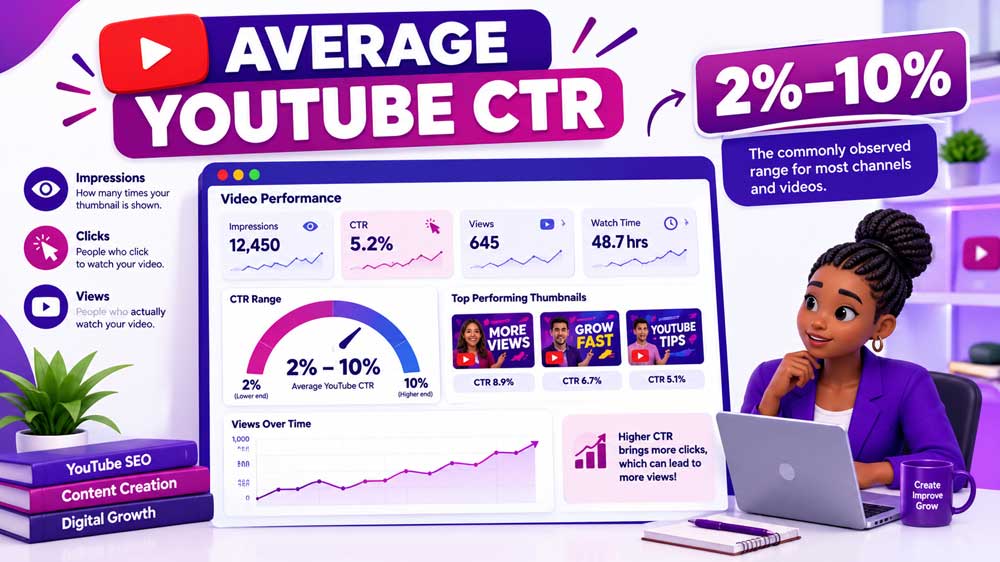
YouTube CTR stands for YouTube click-through rate. It measures the percentage of registered thumbnail impressions that result in people watching your video.
Think of your video thumbnail as a sign outside a shop. Hundreds of people might walk past the shop, but only some will enter. In the same way, many people might see your YouTube thumbnail, but only some will click and watch.
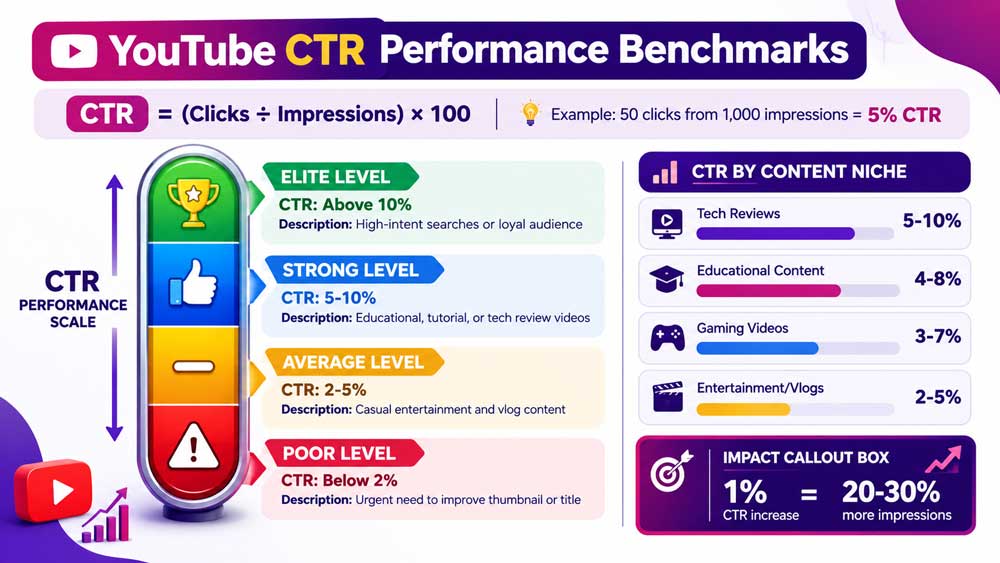
For example, imagine YouTube shows your video thumbnail to 1,000 people through registered impressions. If 50 of those impressions lead to views, your CTR is 5%.
Here is the simple formula:
YouTube CTR = (Views from impressions ÷ Impressions) × 100
Using our example:
This means your video achieved a 5% click-through rate from those impressions. Your total views may be higher because YouTube does not count every place where someone can see or click your video as a registered impression.
What Is a YouTube Impression?
A YouTube impression happens when your video thumbnail is shown to someone in certain places on YouTube, such as Search, Home or suggested video areas, under YouTube’s counting rules.
An impression is an opportunity for someone to notice your video. It does not automatically mean that the person watched it.
For example, suppose your video appears when someone searches for “how to edit videos on a phone.” If that person sees your thumbnail but chooses another video, the impression may count without producing a view from that impression.
Understanding impressions helps you make sense of your YouTube CTR. A low number of impressions means YouTube has shown your thumbnail to relatively few people. A low CTR means a smaller percentage of counted impressions have turned into views.
What Is a Good YouTube CTR? Average CTR Explained
According to YouTube’s official impressions and click-through rate FAQ, half of all channels and videos have an impressions CTR between 2% and 10%.
This range is a useful starting point, but it does not mean every video should achieve 10%. Your results depend on your audience, video topic, traffic source and how widely YouTube shows your content.
A video with a 4% CTR can perform well if it reaches many interested viewers. Meanwhile, a video with a 12% CTR might have received very few impressions from a small group of loyal subscribers.
Is 3%, 5% or 10% a Good YouTube CTR?
A CTR of 3% can be reasonable, particularly when YouTube is showing your video to a broad audience. It does not automatically mean that your thumbnail is bad or your video needs a complete redesign.
A CTR of 5% falls within YouTube’s commonly observed 2%–10% range. It can be a useful result, but you should compare it with your own channel’s previous videos and consider how many impressions the video received.
A CTR of 10% or higher can be encouraging, especially when the video also attracts enough impressions and keeps viewers watching. However, a high percentage from a small audience does not guarantee that the video will reach thousands of people.
The best approach is to use these figures as guides rather than strict targets. YouTube explains that CTR can vary widely, so focus on improving your own results over time.
What Is a Good YouTube CTR for Small Channels?
If you have a new channel, do not panic when your first few videos have low CTR or changing numbers. YouTube may initially show your videos to a limited audience, and small numbers can make your results fluctuate.
For example, if 10 people see your thumbnail and two click, that represents a 20% CTR. It looks impressive, but it is based on only 10 impressions. If YouTube later shows the same video to 1,000 people and 40 click, the CTR becomes 4%.
The second result has a lower percentage but produces more views from impressions. This is why small channels should avoid judging a video too quickly.
Instead, study your results over time. Look for videos that attract viewers, compare their topics and thumbnails, and use what you learn when planning your next upload.
Why Does Your YouTube CTR Change?
Your YouTube CTR is not a permanent score. It can rise or fall as your video reaches different groups of people.
One reason is the audience itself. Your regular subscribers may already know your content and be more willing to click. When YouTube shows the same video to people who have never heard of you, some may choose other videos instead.
The topic also matters. A video answering a specific question may attract people who are actively searching for that answer. A general entertainment video shown on the Home page may compete with many other interesting choices.
Traffic Sources Affect Your Average YouTube CTR
YouTube Search, Home and suggested videos do not always produce the same CTR. People searching for a particular answer may have a clear reason to click. People browsing their Home page may simply be looking for something interesting.
For example, someone searching for “how to make a YouTube thumbnail” may be ready to watch a tutorial. A person scrolling through the Home page may only click if your title and thumbnail catch their attention.
This is why you should compare videos with similar traffic sources when possible. A CTR difference does not always mean one thumbnail is better than another.
More Impressions Can Mean a Lower CTR
Imagine your video first reaches 500 people who already enjoy your content. Many of them click, giving you a high CTR. Later, YouTube shows the video to 20,000 additional people who are less familiar with your channel.
Your CTR may fall because the larger audience has different interests. Yet your video could still be gaining views and reaching new people.
This is an important lesson: a falling YouTube CTR is not always bad news. Look at impressions, total views and watch time together before deciding whether your video needs improvement.
How to Check Your YouTube CTR in YouTube Studio
You do not need to pay for a special tool to check your YouTube CTR. YouTube Studio provides the information you need.
Follow these steps:
-
Open YouTube Studio and sign in to your channel.
-
Select Content from the left-hand menu.
-
Choose the video you want to study.
-
Open its Analytics section.
-
Select the Reach tab, or look for the impressions and click-through rate report in the available analytics.
-
Check your impressions, impressions CTR and other performance figures.
You can also compare different videos over a similar period. This helps you identify which topics, titles and thumbnails attract more clicks.
Do not rush to change a thumbnail immediately after uploading. Give the video enough time to collect useful data, and remember that a small change in CTR may simply be normal variation.
For more details, read YouTube’s official guide to understanding video performance.
7 Practical Ways to Improve YouTube CTR
Improving your YouTube CTR starts with making your video easier for the right audience to notice and understand. Here are seven practical steps you can take.
1. Create Clear, Attractive Thumbnails
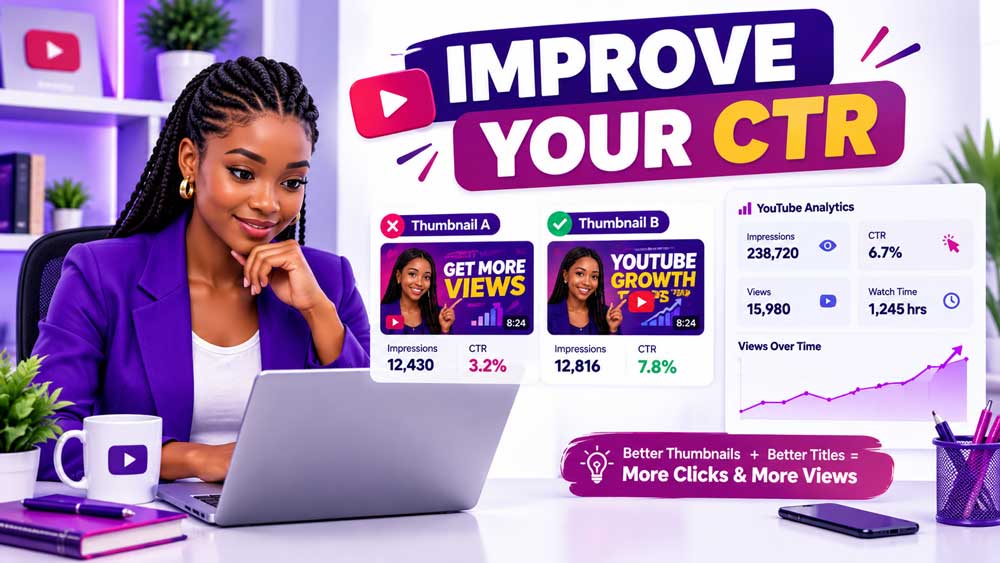
Your thumbnail is often the first thing people notice. Use a clear image, strong contrast and a simple design that communicates the video’s main idea.
Avoid filling the thumbnail with too many words, tiny pictures or distracting effects. A person viewing it on a phone should understand the main message quickly.
For example, a video about getting more views might use a clear upward graph and the words “MORE YOUTUBE VIEWS.” The design should support the topic rather than promise results that the video cannot deliver.
2. Write Titles That Match What People Want
A good title tells viewers what they will learn or why the video is worth watching. Use natural language and include your main keyword when it fits.
For instance, “YouTube CTR Explained for Beginners” is clearer than “My New Video About Numbers.” The first title tells people exactly what they can expect.
Avoid making promises you cannot keep. A misleading title may attract clicks at first, but viewers can leave when they discover that the video does not deliver what it promised.
3. Make Your Title and Thumbnail Work Together
Your title and thumbnail should support the same message without simply repeating each other. The title can explain the topic, while the thumbnail highlights one interesting point.
Imagine your title is “What Is a Good YouTube CTR?” Your thumbnail could show a simple analytics screen with “2%–10%?” in large text. Together, they tell viewers what the video is about and give them a reason to learn more.
For more ideas, read Webiliti’s guide to designing a high-converting YouTube thumbnail.
4. Choose Topics Your Audience Actually Needs
Even an attractive thumbnail may struggle if the topic does not interest your intended viewers. Before recording, think about the questions your audience asks and the problems they want to solve.
If your channel teaches video editing, topics such as editing videos on a phone, improving sound quality or creating thumbnails may be more useful than unrelated subjects.
You can also study comments on your previous videos. Questions that appear repeatedly can give you ideas for new content that matches your audience’s interests.
5. Make Your Videos Easy to Understand
A click is only the beginning. When viewers open your video, make sure the content matches the title and thumbnail.
Start by explaining what the viewer will learn. Avoid long introductions that delay the answer, and organise your points in a clear order.
When people get the information they expected, they have a better reason to keep watching. This can help improve audience retention, which is another important part of understanding video performance.
6. Study Your Best-Performing Videos
Open YouTube Studio and compare your videos. Look at their CTR, impressions, traffic sources and average view duration.
Suppose one tutorial has a 6% CTR and another has a 3% CTR. Check whether they cover similar topics and reach similar audiences before deciding why the results differ.
Look for patterns rather than copying another creator’s design blindly. Your audience may respond to different colours, subjects or title styles.
7. Test Improvements and Learn From the Results
When a video is underperforming, consider whether its title or thumbnail could communicate the topic more clearly. If your channel has access to YouTube Studio’s Test & Compare feature, you may be able to test thumbnail options on eligible videos.
Change your approach based on meaningful evidence, not a few early clicks. Avoid changing several things at once if you want to understand which adjustment helped.
Remember that no thumbnail, title or technique guarantees a high CTR. The goal is to learn what helps your audience recognise and choose your content.
Why a High YouTube CTR Does Not Always Mean More Views
It is easy to think that a high YouTube CTR automatically means your video will become popular. Unfortunately, it does not work that way.
CTR measures how often registered impressions lead to views. It does not tell you how many people saw the thumbnail in total, how long they watched or whether they enjoyed the video.
For example, Video A gets 100 impressions and a 10% CTR, producing about 10 views from impressions. Video B gets 10,000 impressions and a 4% CTR, producing about 400 views from impressions. Video B has a lower CTR but reaches many more viewers.
This is why you should study several metrics together. If your CTR is high but your average view duration is low, your title or thumbnail may be creating expectations that the video does not meet. If your CTR is moderate but your impressions and watch time are growing, your video may be reaching a wider audience successfully.
For more advice on building your audience, explore Webiliti’s guide to getting free YouTube views without paying.
Common YouTube CTR Mistakes to Avoid
One common mistake is comparing your channel directly with a large creator. Established channels may have loyal viewers, stronger brand recognition and different audiences. Their results do not automatically provide a fair target for your videos.
Another mistake is changing a thumbnail every few hours because the CTR has moved slightly. You need enough information to make a useful decision. Small changes can happen naturally, especially when a video has received few impressions.
The third mistake is using clickbait. A title such as “Get One Million Views Overnight” may attract attention, but it can disappoint people if the video does not deliver. A trustworthy title that attracts the right audience is more valuable in the long run.
Finally, do not focus on CTR alone. Pay attention to the quality of your content, audience retention, impressions and the total number of views. Your goal is not simply to make people click. It is to help the right people find videos worth watching.
Frequently Asked Questions About YouTube CTR
Is a 5% YouTube CTR good?
A 5% YouTube CTR falls within the 2%–10% range reported by YouTube for half of all channels and videos. Whether it is good for your video depends on its audience, traffic sources, impressions and performance over time.
Is a 10% YouTube CTR good?
A 10% CTR can be a strong result, but it is not a guarantee of success. Check how many impressions the video received and whether viewers continued watching after they clicked.
Why is my YouTube CTR low despite getting impressions?
Your thumbnail may be hard to understand, your title may not match the audience’s interests, or your video may be reaching people who are less familiar with your channel. Compare traffic sources and review the title-thumbnail combination before making changes.
Does YouTube CTR affect monetization?
CTR is not a monetization requirement by itself. It is a performance metric that helps you understand how viewers respond to your thumbnails and titles. Monetization depends on YouTube’s applicable eligibility rules and policies.
Can I improve my YouTube CTR without spending money?
Yes. You can improve your titles, simplify thumbnails, research useful topics and study YouTube Studio analytics without buying advertising or paying for specialist software. Results are not guaranteed, but these steps help you make informed decisions.
Conclusion: Focus on a Better YouTube CTR, Not Just a Bigger Number
So, what is a good YouTube CTR? YouTube reports that half of all channels and videos fall between 2% and 10%, but your ideal result depends on your content and audience.
A good YouTube CTR is one useful sign that your title and thumbnail are attracting the right viewers. It should be considered alongside impressions, views, average view duration and audience retention.
Start with one simple task today. Open YouTube Studio, select a video and study its CTR alongside its impressions and watch time. Then choose one improvement, such as making the thumbnail clearer or writing a more specific title.
If you want to grow your channel further, continue with Webiliti’s guides on getting your first 1,000 YouTube views and understanding YouTube watch hours versus views.
You do not need to get everything right with your first video. Learn from your analytics, keep helping your audience and improve one upload at a time.
Recommended affiliate calls to action
Use these as separate promotional sections near the end of the article. The recommendations should support the article’s topic rather than interrupt the explanation.
1. Need Help Managing Your Social Media?
Creating videos is only one part of growing an online presence. You also need to plan posts, share useful updates and keep your audience engaged across social platforms.
If you need a website or domain for your content and online brand, explore Namecheap’s services and see whether they suit your needs.
Explore Namecheap
2. Looking for Ways to Promote Your Content?
Improving your YouTube CTR starts with a good title and thumbnail, but getting your content in front of interested people also matters. You can explore LeadLeap to learn about its online promotion and marketing tools.
Focus on attracting genuine visitors who are interested in your content. Avoid artificial views or engagement schemes, and review any service carefully before using it.


Leave a Reply