



How to Get Your First 1,000 YouTube Views
Have you ever uploaded a YouTube video, waited for people to watch it, and discovered that only a few people had seen it? If that sounds familiar, you are not alone. Getting your first 1,000 YouTube views can feel difficult, especially when you are just starting.
The good news is that you do not need expensive equipment, thousands of subscribers, or a big advertising budget to begin growing your channel. What you need is a helpful video, a clear title, an attractive thumbnail, and a simple plan for reaching the right people.
In this guide, you will learn how to get your first 1,000 YouTube views using practical strategies that beginners can follow. You will also discover how to use YouTube SEO, Shorts, free promotion, and analytics to improve your results over time.
1. Understand Where Your First 1,000 YouTube Views Come From
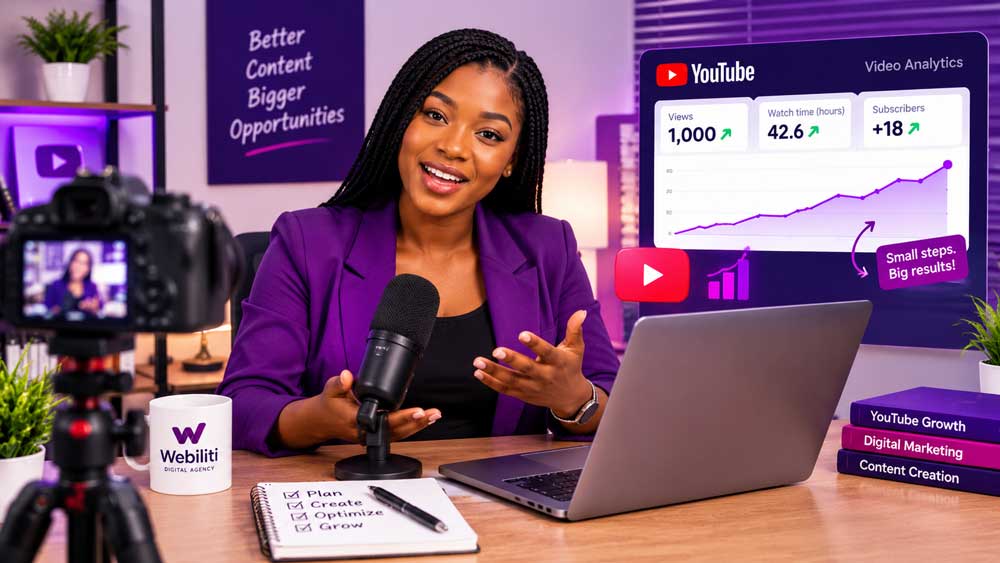
Your first 1,000 YouTube views will usually come from several places rather than one magical source. People might discover your videos through YouTube Search, the Shorts feed, suggested videos, your channel page, or links you share elsewhere.
Think of your channel as a small shop on a busy street. Opening the shop is only the first step. People also need a reason to enter, something useful to find inside, and a way to discover that your shop exists.
Start by thinking about who would benefit most from your videos. If you teach people how to edit videos on their phones, your audience may include beginners who want simple instructions without expensive software. When you understand these viewers, choosing topics and writing titles becomes easier.
Do not worry if your first few uploads receive only a small number of views. Use them to learn what people respond to. Your first 1,000 YouTube views are a useful milestone, but the real goal is to attract viewers who enjoy your content and may return for more.
2. Choose Topics People Want to Watch
One of the easiest ways to struggle with YouTube views is to create videos without considering what people want to learn, solve, or enjoy. A good video topic connects your knowledge with a real question or interest.
For example, imagine you have a channel about mobile photography. A broad title such as “My Phone Camera” does not tell viewers much. A more useful topic might be “How to Take Clear Photos With Your Phone.” The second idea gives viewers a reason to click because they know what they can learn.
Look for ideas in the questions people ask you, comments on relevant videos, YouTube search suggestions, and the topics your audience already enjoys. You can also visit YouTube’s official guide to understanding what viewers watch for ideas on using audience information to plan future content.
Before recording, ask yourself three questions: Who is this video for? What problem does it solve? Why would someone choose it instead of another video? Clear answers can help you create content with a better chance of attracting genuine YouTube views.
3. Improve Your YouTube Titles and Thumbnails
Your title and thumbnail are often the first things people notice when they see your video. Even a helpful video can be overlooked if its title is confusing or its thumbnail is difficult to understand.
Write clear, searchable video titles
A good title explains what the viewer will get from watching. For example, “YouTube Tips” is vague, while “7 Simple Ways to Get More YouTube Views” gives a clearer idea of the benefit.
Include your main keyword when it fits naturally. If your video explains how beginners can promote their channels, you might use “How to Get More YouTube Views as a Beginner.” Avoid repeating keywords unnecessarily or promising results your video cannot deliver.
Keep the title accurate, put the important words near the beginning, and make sure the video delivers what the title promises. YouTube’s official title and thumbnail guidance offers additional advice on presenting videos clearly.
Design thumbnails that earn clicks
A thumbnail is like the sign outside a shop. It should quickly tell people what the video is about and give them a reason to take a closer look.
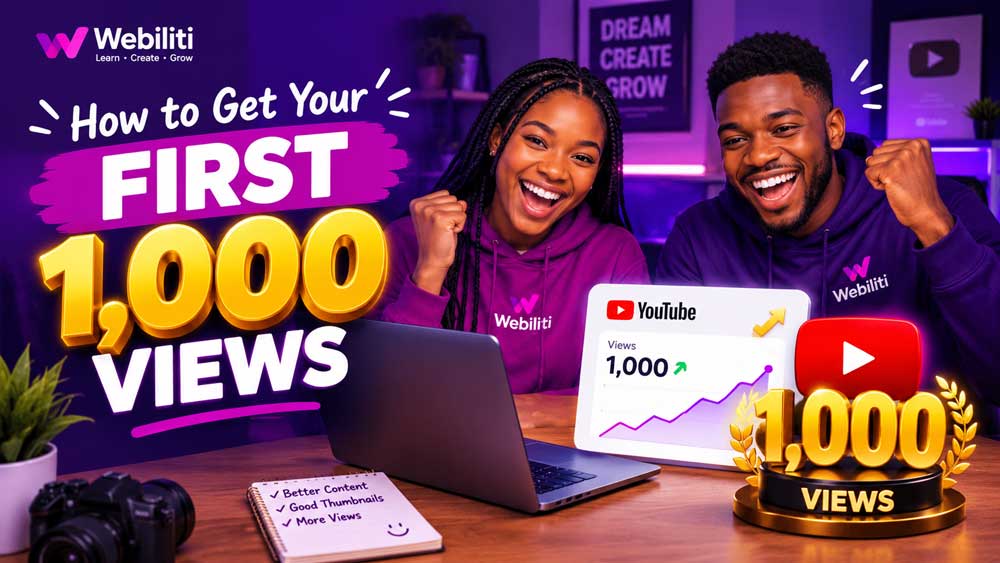
Use a clear image, readable text, and a simple layout. For a video about reaching 1,000 YouTube views, you could show a creator beside a rising graph with the words “FIRST 1,000 VIEWS.” Use strong contrast so the main message remains easy to read on a phone.
Avoid filling the thumbnail with tiny words, unrelated pictures, or misleading promises. Your title and thumbnail should work together. If they attract the wrong audience, viewers may leave quickly, which is not helpful for long-term channel growth.
4. Use YouTube SEO to Help People Find Your Videos
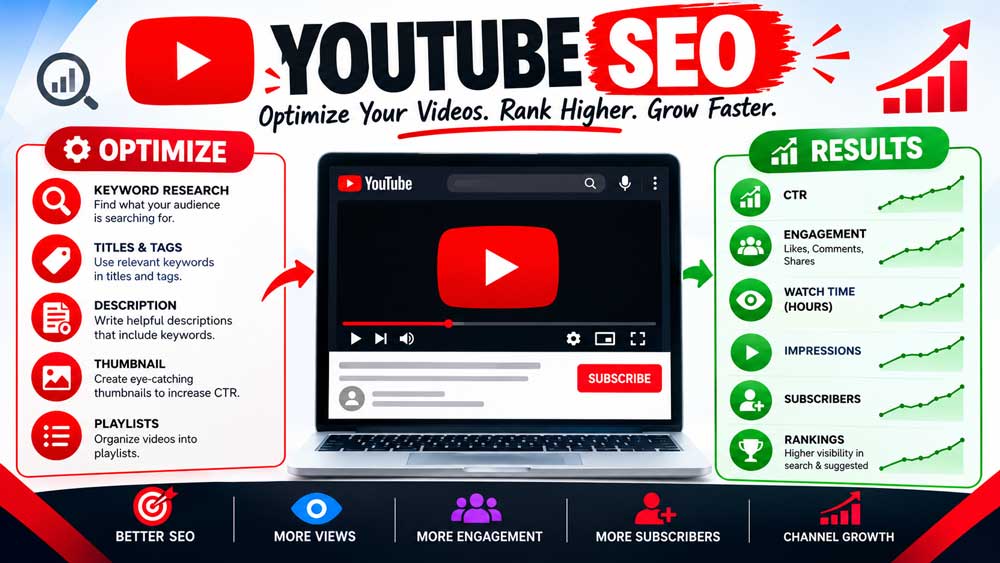
YouTube SEO means making your video easier for the right people to discover through search. It starts with understanding the words people use when looking for information.
Suppose your video teaches viewers how to grow a new channel. Relevant phrases could include “how to get YouTube views,” “YouTube views for beginners,” and “YouTube video promotion.” Choose phrases that closely match what your video actually covers.
Place the main phrase naturally in your title, mention the topic clearly in your description, and explain the video in a way that helps viewers understand its value. Add relevant chapters when useful, and organize related uploads into playlists so people can find more videos on the same subject.
Do not spend all your time adding tags. YouTube explains that tags play a limited role in discovery and are mainly useful for common spelling mistakes. Clear titles, useful descriptions, appealing thumbnails, and satisfying videos deserve more attention.
For more practical advice, read our guide to getting free YouTube views without paying. It provides another starting point for learning about organic video promotion.
5. Use YouTube Shorts to Reach New Viewers
YouTube Shorts can introduce your content to people who have never visited your channel. They are particularly useful when you can explain one small idea in a short, engaging video.
Imagine that you have a ten-minute tutorial about improving video thumbnails. Instead of repeating the whole tutorial, create a short clip showing three thumbnail mistakes to avoid. End by inviting interested viewers to watch the full tutorial on your channel.
Make the opening seconds interesting. Start with the problem, demonstrate something useful, or ask a question your intended audience wants answered. Avoid long introductions that delay the information people came to see.
Keep your Shorts relevant to your main channel topic. If you teach video editing, upload Shorts about editing tips, common mistakes, or quick demonstrations. This helps viewers understand what your channel offers and gives interested people a reason to explore your longer videos.
Shorts do not guarantee 1,000 YouTube views, but they provide another way to reach potential viewers without paying for advertising. Review which clips attract attention and use those lessons when planning future uploads.
6. Promote Your Videos for Free
Uploading a video and hoping people find it is not always enough, particularly when your channel is new. Thoughtful promotion helps introduce your work to people who are already interested in the subject.
Share your video on relevant social media accounts, including Facebook, LinkedIn, or X, depending on your topic and audience. Do more than paste a link. Write a short introduction explaining what people will learn, then invite them to watch if the topic interests them.
For example, when sharing a video about growing a YouTube channel, you could write: “Starting a new YouTube channel? Here are five practical ways to help people discover your videos without spending money on ads.” This gives readers a reason to click.
You can also participate in online communities where your topic is relevant. Answer questions genuinely, follow group rules, and share your video only when it adds value to the discussion. Avoid spamming unrelated groups or sending unwanted messages.
Your website can also help bring visitors to your channel. Write a useful blog post about the subject of your video and embed the video where it supports the explanation. This creates another way for interested readers to discover your content.
7. Keep Viewers Watching Until the End
Getting a click is only part of the journey. If people leave shortly after your video begins, they may not receive the value you intended to provide.
Imagine clicking a cooking video because you want to learn how to prepare a quick meal. If the creator spends the first two minutes discussing unrelated topics, you might leave before the instructions begin. The same thing can happen with tutorials, reviews, educational videos, and entertainment content.
Start by telling viewers what they will learn, then move into the main content quickly. Use clear explanations, helpful examples, demonstrations, and natural transitions. Remove repeated points and unnecessary pauses where they make the video less useful.
You should also deliver what your title and thumbnail promise. If your title says “Five Ways to Improve Your YouTube Views,” make sure viewers can easily find those five tips.
Check audience retention in YouTube Analytics to see where viewers tend to stop watching. A sudden drop may suggest that a section is too slow, confusing, or different from what people expected. Use the information as a clue for improving the next video, rather than assuming every viewer will behave the same way.
8. Check Analytics and Improve Your Next Video
YouTube Analytics helps you understand what happens after you publish a video. Instead of guessing why your YouTube views are increasing or staying low, you can examine useful information about how people discover and watch your content.
Start by checking impressions, click-through rate, views, average view duration, and audience retention where those metrics are available. Impressions show how often your thumbnail was displayed in eligible YouTube surfaces. Click-through rate helps you understand how often those impressions led to views.
Consider two examples. If a video receives impressions but few people click, its title or thumbnail may need improvement. If people click but leave very early, the opening or the match between the title and content may need attention. These are clues to investigate, not automatic proof of a particular problem.
Compare videos covering similar topics and formats. If your practical tutorials attract more interested viewers than your general updates, consider making more tutorials. If a particular question repeatedly brings people to your channel, develop a follow-up video that answers the next question.
For creators who want to build more watch time alongside views, read our guide to 10 proven ways to get more YouTube watch hours. Explore the digital marketing section for related guidance, and use your own Analytics data to decide which advice fits your channel.
Common Mistakes That Stop YouTube Views
Some habits can make it harder to build a real audience. One common mistake is buying fake views or using services that promise instant numbers. Artificial traffic does not guarantee interested viewers, and attempts to manipulate engagement can violate YouTube’s policies.
Another mistake is changing your channel topic so often that viewers cannot tell what you offer. You can experiment, but try to connect your videos through a clear theme or audience. Someone who subscribes for beginner photography tips may not be interested in unrelated gaming videos.
Do not ignore your thumbnails, titles, or the first part of your video. Also, avoid copying another creator’s work. Learn from successful channels, but use your own examples, voice, and approach.
Finally, do not judge your future by one upload. A video that receives few views today may teach you something useful for the next one. Consistent improvement is more valuable than chasing shortcuts.
Your First 1,000 YouTube Views: A Simple Action Plan
Start with one clear topic that solves a problem for your intended audience. Write a useful title, design a readable thumbnail, and create a video that delivers the promised information without unnecessary delays.
After publishing, share it with people who are likely to find it useful. Create a related Short, add the video to an appropriate playlist, and consider writing a supporting blog post. These steps give your content more opportunities to be discovered.
Over the next few weeks, review your analytics and note what worked. You might discover that viewers prefer shorter tutorials, search for a particular question, or respond better to a different thumbnail style. Use these findings to plan your next upload.
You do not need to do everything perfectly on day one. Focus on making each video a little more helpful, clearer, and easier to discover than the last.
Conclusion: Start Building Your YouTube Views Today
Getting your first 1,000 YouTube views is a realistic milestone to work toward, although the time it takes will vary from channel to channel. There is no guaranteed shortcut, but useful content, clear titles, strong thumbnails, YouTube SEO, Shorts, and thoughtful promotion can improve your chances.
Remember that every view represents an opportunity to help, entertain, or teach someone. Build for real people rather than chasing a number alone, and use your results to make smarter decisions.
Ready to grow your channel? Start with one helpful video, apply the tips in this guide, and keep learning from your audience. Your first 1,000 YouTube views can be the beginning of a stronger, more focused channel.
Helpful Resources for Growing Your YouTube Channel
Creating good videos is only one part of building an audience. Planning your content, promoting your work, and managing your online presence can also take time.
Looking for help with your online presence?
Explore this Namecheap resource to see whether its available services fit your website or social media needs. Check the current offering before signing up.
Want to explore additional website traffic and promotion tools?
Visit LeadsLeap to learn about its marketing and traffic-related features. Choose methods that bring genuinely interested people to your content, and check the terms of any service before using it.
A quick note: These are affiliate links. Webiliti may earn a commission if you make a qualifying purchase or take an eligible action through them, at no extra cost to you where applicable. Always review the service’s current terms before signing up.
Remember, no tool can guarantee 1,000 genuine YouTube views. Focus on useful content and promotion that attracts people who actually want to watch.
Leave a Reply